

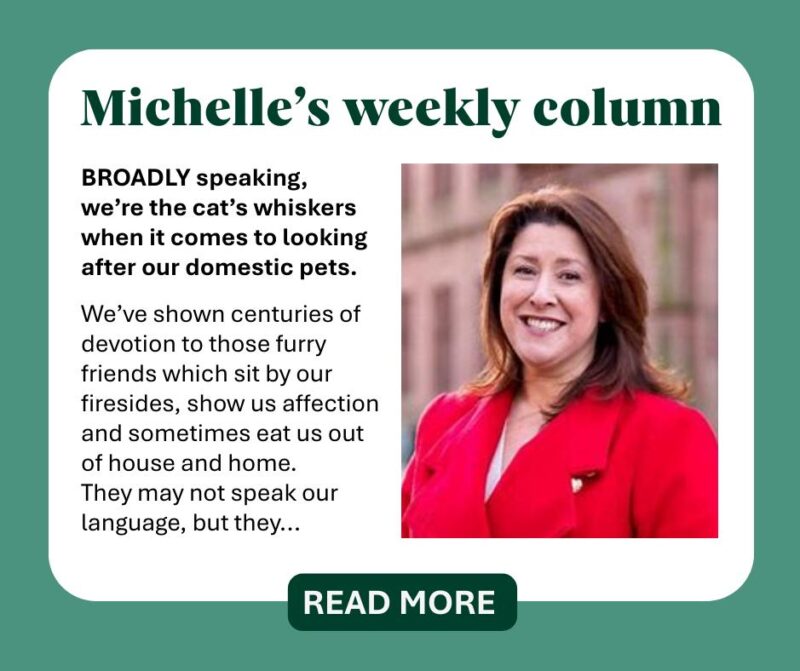
BROADLY speaking, we’re the cat’s whiskers when it comes to looking after our domestic pets.
We’ve shown centuries of devotion to those furry friends which sit by our firesides, show us affection and sometimes eat us out of house and home.
They may not speak our language, but they communicate and many of us would be lost without them.
Our family just wouldn’t be the same without Charlie, our seven-year-old cocker spaniel and Jags, our rescue cat.
But the national picture isn’t completely rosy, and shortly before Christmas the government published its Animal Welfare Strategy for England which aims to protect animals at home, on the farm and in the wild.
After years of broken promises on animal welfare under the last government, many animals have been left to endure suffering through outdated laws which continue to permit poor welfare practices.
Labour’s strategy is a comprehensive package of changes which will improve the lives of millions of animals across the country.
They include manifesto commitments including banning trail hunting, ending the use of snare traps and preventing puppy smuggling.
By improving animal welfare standards Labour is also supporting healthier, more productive livestock that delivers better outcomes for farmers, farm profitability, food security and the high welfare standards that British consumers expect.
Animals have always been at the heart of British culture and identity.
From the cats and dogs we share our homes with to the wildlife in our neighbourhoods – our relationship with animals runs deep.
They bring us comfort and companionship, support our livelihoods and keep our eco-systems healthy.
The strategy will address loopholes in our current legislation which puts companion animals at risk of mistreatment and abuse.
Labour will also launch a consultation on licensing domestic rescue and rehoming organisations to ensure high welfare standards are applied.
More needs to be done so that responsible pet owners are supported to keep their pets in the private rented sector.
Labour will implement the measures in the Renters’ Rights Act to make it easier for tenants to keep pets in rented accommodation.
Snare traps are being banned because they cause suffering to animals and can catch pets.
There will also be a close season introduced for hares, which will reduce the number of adult hares being shot in the breeding season, meaning that young hares are not left motherless and vulnerable.
I believe how a person treats animals is a strong indicator of who they are, and that cruelty to animals often mirrors cruelty to humans, reflecting a deep character flaw, while kindness to animals shows compassion; a strong indicator of empathy, with many believing it reveals a person’s core nature and capacity for kindness.
Animals can’t advocate for themselves, so it’s our responsibility to do that for them.